


Negotiation as an art and negotiation as a science are often framed as fundamentally different ideas. Yet a single cohesive element binds them together: process. While the blueprint for achieving your goals may differ depending on the negotiation at hand, the road to negotiation success tends to look remarkably similar across contexts.
In discussing the art and science of negotiation, renowned diplomat Tommy Koh identified five core “fundamentals” that, according to Program on Negotiation faculty member James K. Sebenius, “have value in almost any negotiation.”
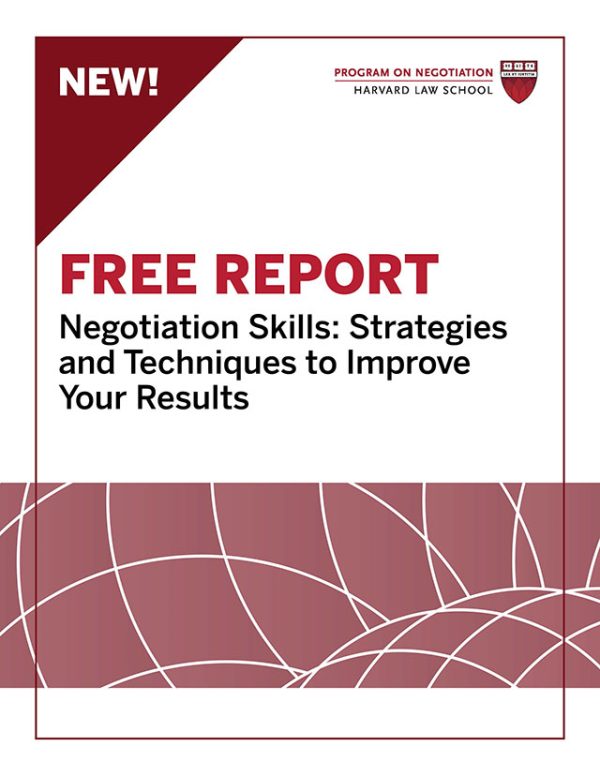
Claim your FREE copy: Negotiation Skills
Build powerful negotiation skills and become a better dealmaker and leader. Download our FREE special report, Negotiation Skills: Negotiation Strategies and Negotiation Techniques to Help You Become a Better Negotiator, from the Program on Negotiation at Harvard Law School.
Five Often-Neglected Fundamentals of Negotiation
These fundamentals may sound deceptively simple, but they are frequently overlooked—especially in high-pressure or complex negotiations:
- Master your brief. Know your facts, your objectives, your constraints, and your alternatives. Preparation remains the single most reliable predictor of negotiation success.
- Build a talented, happy, and cohesive team. Internal alignment matters. Teams that trust one another negotiate more effectively and present a stronger, more consistent front.
- Build a common fact base. Agreement becomes far more attainable when parties can agree on basic facts, data, and assumptions—even if their interpretations differ.
- Think outside your own box. Effective negotiators resist the urge to see the negotiation solely through their own lens. Understanding how the other side frames the problem opens new paths forward.
- Think win-win. Value creation, not just value claiming, is what distinguishes durable agreements from fragile ones.
These five principles apply to almost any negotiation you will encounter—from workplace discussions to business deals to public policy disputes.
Lessons From the World’s Most Complex Negotiations
While these fundamentals are broadly applicable, Ambassador Koh also offered insights tailored to negotiators facing far more complex challenges—particularly those involving multiple parties, cultures, and national interests.
To put his perspective in context, Tommy Koh became the youngest ambassador ever appointed to the United Nations and later served as Singapore’s Ambassador to the United States. Over the course of his career, he played central roles in some of the most demanding negotiations of the modern era. Among them, he:
- Led negotiations over China’s recognition of Singapore while preserving Singapore’s crucial relationship with Taiwan
- Served as President of the Third United Nations Conference on the Law of the Sea, where thousands of delegates crafted what has been called a “constitution for the oceans,” ultimately ratified or signed by 197 countries
- Chaired negotiations at the Rio “Earth Summit,” a high-water mark of international environmental cooperation attended by more than 130 heads of state and government, producing agreements on forests, biodiversity, desertification, and climate change
- Acted as chief negotiator for Singapore in talks leading to the U.S.–Singapore Free Trade Agreement
In each case, the same fundamentals were present—applied with discipline, creativity, and patience at a far larger scale.
Why the Fundamentals Still Matter
Studying a negotiator like Tommy Koh reminds us that even the most inventive strategies rest on a foundation of sound process. Mastery of fundamentals does not limit creativity; it enables it—especially when negotiations grow more complex, political, or uncertain.
For a deeper exploration of Koh’s approach to leading large, multinational negotiations, see James K. Sebenius’s analysis on the Harvard Business Review blog.
From great negotiators, we learn not only how to handle the toughest cases—but also how to re-learn the basics we too often neglect.
Who do you think of as a great negotiator? Share your favorites in the comments.
Claim your FREE copy: Negotiation Skills
Build powerful negotiation skills and become a better dealmaker and leader. Download our FREE special report, Negotiation Skills: Negotiation Strategies and Negotiation Techniques to Help You Become a Better Negotiator, from the Program on Negotiation at Harvard Law School.
Related Article: Great Negotiator Tommy Koh Describes Negotiation as Both an Art and Science




Rightly pointed out; Mastering your brief should be the fundamental element of a negotiation and that applies to all negotiators, arbitrators and mediators.