Why is negotiation important in business? Because it lies at the heart of almost every commercial interaction—from purchasing equipment and setting salaries to structuring partnerships and resolving disputes—making it an essential skill across professional fields.
One way to strengthen your position in these discussions is by relying on objective standards. Independent benchmarks and market data can lend credibility to your proposals and help reduce emotional bias, allowing conversations to focus on fairness and shared interests rather than personal positions.
In this article, the author brings this idea to life through clear, practical examples and offers actionable steps for incorporating objective criteria into future negotiations.
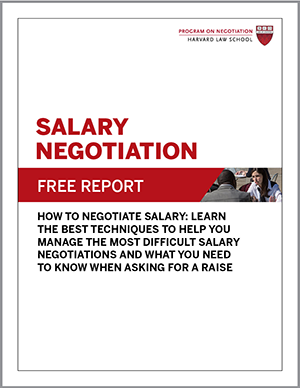
Claim your FREE copy: Salary Negotiations
Discover how to refine your negotiation skills with this free special report, Salary Negotiations: How to Negotiate Salary: Learn the Best Techniques to Help You Manage the Most Difficult Salary Negotiations and What You Need to Know When Asking for a Raise, from Harvard Law School.
Lessons from Failed Negotiations
Here are a few of the lessons Jeswald Salacuse shared from his failed negotiations.
1. Develop objective standards prior to a negotiation
As part of her preparation and negotiation research, effective negotiators estimate the zone of possible agreement (ZOPA), discover her and her opponent’s BATNA (best alternative to a negotiated agreement), and develop tangible measures of negotiation success. This keeps her on track while negotiating at the bargaining table.
2. Objective standards can be informed by multiple sources.
Historic precedent, industry best practices, legal rulings or moral dictates, independent opinions, or market-based information are some of the criteria negotiators can rely upon during negotiations. Choose the standard most appropriate to the bargaining session at hand.
3. Insist on your counterpart using objective standards.
Make him explain how he arrived at his estimate before accepting it or rejecting it. Your negotiating counterpart should be able to delineate the reasoning behind his request and asking him to do so can help you bridge the gap between two different objective standards at the bargaining table. If you can’t agree on an objective basis for negotiations, employing a neutral third-party mediator or arbitrator can help break the impasse in negotiations.
How do you set standards during negotiations? Let our readers know in the comments section below.
Related Business Negotiations Article: Business Negotiation: When is an Outsider Needed at the Negotiation Table – How to conduct negotiations including outsiders and other negotiation topics in business.
10 Great Examples of Negotiation in Business – These examples of negotiation in business share ten great lessons.
Claim your FREE copy: Salary Negotiations
Discover how to refine your negotiation skills with this free special report, Salary Negotiations: How to Negotiate Salary: Learn the Best Techniques to Help You Manage the Most Difficult Salary Negotiations and What You Need to Know When Asking for a Raise, from Harvard Law School.
Originally published in 2011.
Tufts Magazine, Tufts University: Negotiating Life
Jeswald W. Salacuse (Henry J. Baker Professor of Law; former Dean, Fletcher School of Law and Diplomacy, Tufts University; author of The Global Negotiator and Seven Secrets for Negotiating with Government)