


Asking for a raise can feel intimidating. But if you believe you’re underpaid and due for a salary increase, a well-prepared negotiation can significantly influence your long-term earnings and career trajectory.
Negotiation experts emphasize that salary discussions are not just about money—they’re about value, timing, and strategy.
Here’s how to approach the conversation thoughtfully and effectively.
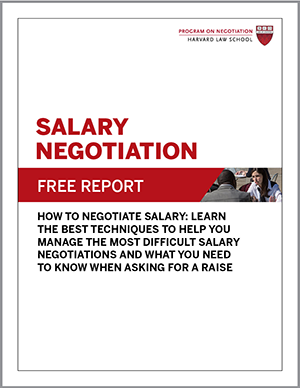
Claim your FREE copy: Salary Negotiations
Discover how to refine your negotiation skills with this free special report, Salary Negotiations: How to Negotiate Salary: Learn the Best Techniques to Help You Manage the Most Difficult Salary Negotiations and What You Need to Know When Asking for a Raise, from Harvard Law School.
1. Do Your Research Before Asking for a Salary Increase
One of the most common mistakes employees make is requesting a raise without sufficient preparation.
Before scheduling the conversation, research three key areas:
Your Organization’s Financial Health
Does your company appear financially stable? Are raises being granted elsewhere in the organization?
You may gather clues from:
- Earnings reports or public filings
- Industry news
- Internal communications
- Informal conversations with trusted colleagues
As negotiation scholars Terri R. Kurtzberg and Charles E. Naquin explain in The Essentials of Job Negotiations: Proven Strategies for Getting What You Want, timing matters. If your organization—or industry—is facing financial strain, your request may face resistance regardless of merit.
Your Market Value
To make a compelling case, determine what professionals with similar:
- Experience
- Education
- Skills
- Geographic location
are earning.
Use:
- Salary databases (Glassdoor, Payscale, LinkedIn Salary)
- Industry associations
- Recruiter conversations
- Professional networks
With pay transparency increasing across industries, it’s often easier than ever to benchmark your compensation. If data shows you are underpaid relative to market standards, you have objective justification—what negotiation experts call legitimacy.
The “Outside Offer” Strategy
Some employees secure another job offer and ask their current employer to match it.
Before using this tactic, ask:
- Is this common in my organization or industry?
- Would leadership view this as professional—or as a threat?
If you use this strategy, be prepared to follow through. An empty threat can damage trust and long-term prospects.
2. Look Beyond Salary: Negotiate the Whole Package
Many people fixate on base pay. But compensation is broader than salary alone.
“Don’t get fixated on money,” writes Harvard Business School professor Deepak Malhotra in his Harvard Business Review article “15 Rules for Negotiating a Job Offer.” “Focus on the value of the entire deal: responsibilities, location, travel, flexibility in work hours, opportunities for growth and promotion, perks, support for continued education, and so forth.”
Consider negotiating:
- Expanded responsibilities (with future promotion path)
- Performance bonuses
- Flexible work arrangements
- Remote or hybrid schedules
- Professional development funding
- Tuition reimbursement
- Equity or stock options
- Additional vacation time
This big-picture view pays off in the long run. “Our research and our work coaching executives suggest that negotiating your role (the scope of your authority and your developmental opportunities) is likely to benefit your career more than negotiating your pay and benefits does,” write Harvard Kennedy School professor Hannah Riley Bowles and Pepperdine Graziadio Business School professor Bobbi Thomason in their Harvard Business Review article “Negotiating Your Next Job.”
If your employer cannot increase your salary immediately, expanding the discussion increases the odds of a mutually beneficial outcome.
3. Frame Your Request Strategically
Once you decide to ask for a raise, framing matters.
Emphasize Value, Not Need
Avoid framing your request around personal expenses or financial stress. Instead, focus on:
- Measurable accomplishments
- Revenue generated or costs saved
- Efficiency improvements
- Leadership contributions
- New skills acquired
- Expanded responsibilities
Connect your performance directly to organizational goals.
Use Data to Justify Your Request
Consider:
- Cost-of-living increases since your last raise
- Time elapsed since your last adjustment
- Promotions without compensation changes
- Market salary benchmarks
Objective criteria strengthen your case and reduce perceptions of entitlement.
Consider Making a Range Offer
Research published in the Journal of Personality and Social Psychology by Daniel R. Ames and Malia F. Masonsuggests that expressing salary requests as a range can be effective.
For example:
“Based on my contributions and market data, I was thinking in the range of 5% to 6%.”
Range offers can:
- Signal flexibility
- Anchor expectations upward
- Reduce perceptions of rigidity
Be sure the range is realistic and well-supported.
Additional Tips for Asking for a Raise
- Schedule a dedicated meeting rather than raising the topic casually.
- Practice your pitch in advance.
- Prepare responses to possible objections.
- Stay calm and professional if the answer is no.
- If denied, ask what milestones would justify a raise in the future.
A “no” today can become a “yes” later with a clear performance roadmap.
Key Takeaway
Asking for a raise is not a confrontation—it’s a negotiation grounded in value, preparation, and strategy.
The most effective approach includes:
- Market research
- Organizational awareness
- Broader compensation thinking
- Clear framing of your contributions
When approached thoughtfully, salary negotiation can strengthen—not strain—your professional relationship.
What strategies have worked for you when asking for a salary increase?
Claim your FREE copy: Salary Negotiations
Discover how to refine your negotiation skills with this free special report, Salary Negotiations: How to Negotiate Salary: Learn the Best Techniques to Help You Manage the Most Difficult Salary Negotiations and What You Need to Know When Asking for a Raise, from Harvard Law School.





Great insights! I especially appreciated the section on preparing your case with detailed accomplishments. It’s so important to approach salary discussions with confidence and clarity. I’ll definitely be using these tips in my next negotiation. Thank you!