How does mediation work in a lawsuit? It’s a common question, and an understandable one. Few people relish the idea of going to court. Litigation is expensive, time-consuming, and often leaves parties frustrated, exhausted, and on worse terms than when they started.
So how does mediation work in a lawsuit, and is legal mediation actually a better alternative?
As with most things in dispute resolution, the answer is: sometimes.
Avoiding Litigation Through Court-Sponsored Mediation Programs
A comprehensive study of court-affiliated mediation programs by Roselle L. Wissler of Arizona State University College of Law offers a nuanced picture. Wissler found that settlement rates in court-sponsored mediation programs varied widely, ranging from 27% to 63%. In some jurisdictions, mediated cases settled at higher rates than nonmediated ones; in others, mediation made little measurable difference.
Several additional studies point to another important benefit: compliance. Parties are generally more likely to comply with mediated agreements than with court-imposed orders. That said, researchers found no significant difference in compliance rates between mediated agreements and privately negotiated settlements).
In other words, mediation can help—but it is not a guarantee.
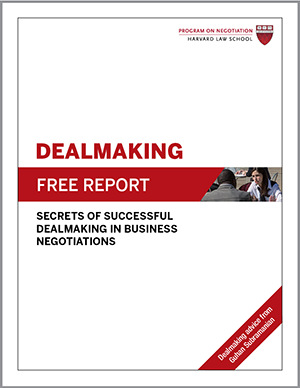
Claim your FREE copy: Dealmaking
Discover how to boost your power at the bargaining table in this FREE special report, Dealmaking: Secrets of Successful Dealmaking in Business Negotiations, from Harvard Law School.
How Does Mediation Work in a Lawsuit? A Look at Transaction Costs
One surprising finding from the research is that court-sponsored mediation does not always reduce transaction costs compared to litigation. This may be because many cases settle “on the courthouse steps,” after lawyers have already invested heavily in discovery, motions, and other pretrial maneuvering.
Despite the costs, participant satisfaction with court-sponsored mediation tends to be high. Depending on the program, between 5% and 43% of litigants reported that mediation helped improve their relationship with the other party—a notable outcome in adversarial disputes.
Not All Legal Mediation Is Created Equal
One key takeaway for managers—and their lawyers—is that the effectiveness of mediation depends heavily on how the program is designed and implemented.
When court-sponsored mediation programs are underfunded or introduced late in the litigation process, mediation can feel like just another bureaucratic box to check before heading to trial. In contrast, jurisdictions that invest serious resources in mediation and intervene earlier often see stronger results.
The biggest benefits of mediation tend to occur early, before disputants become entrenched in rigid positions and before litigation costs spiral out of control. Early mediation can spare parties not only money and time, but also damaged relationships and lost opportunities for creative problem-solving.
Beyond the Courthouse
The mixed results of court-sponsored mediation tell only part of the story. In many cases, disputants may be better served by actively pursuing settlement on their own—sometimes with the help of a private mediator—before a lawsuit is ever filed.
Handled proactively, mediation can offer flexibility, confidentiality, and a greater chance to craft solutions that address underlying interests rather than just legal claims.
How does mediation work for you? If you’ve participated in lawsuit mediation, share your experience in the comments.
Related Articles:
- A Closer Look at Court-Sponsored Mediation – How do alternative dispute resolution processes such as mediation work in the legal system? In this article, we examine the efficacy of court-sponsored ADR processes like mediation in reaching negotiated agreements in dispute resolution scenarios.
- Negotiation and Nonviolent Action: Interacting in the World of Conflict – How does negotiation reconcile differences and help avoid violent conflict? What alternatives do processes like negotiation offer for a world prone to violence and discord? In this article, the basic principles of nonviolent action are examined in light of integrative, win-win negotiation strategies. The challenges of nonviolent action aimed at peace-building and reconciliation are discussed in light of well-known international conflicts.
- What are the Three Basic Types of Dispute Resolution? What to Know About Mediation, Arbitration, and Litigation – What are the differences between the three basic dispute resolution processes, mediation, arbitration, and litigation, and how do they differ from one another? In mediation, a neutral third-party negotiator helps parties reach agreement while in arbitration a decision is imposed upon the two parties through a neutral third-party arbitrator. Litigation, the most well-known dispute resolution process of the three, is when negotiators turn to the court system to resolve disputes. Learn about the advantages, and disadvantages, of each dispute resolution style in this article.
- Top 10 Best Negotiations of 2014: Negotiation Case Studies Drawn from Negotiation Examples in Real Life – Hindsight is 20/20, and, as these negotiation case studies from 2014 demonstrate, the gift of hindsight translates into foresight at the bargaining table. Here is a list of our top 10 best negotiation case studies, news stories, and research findings for the year 2014.
- Lessons for Business Negotiators: Negotiation Techniques from International Diplomacy – What do the arts of dealmaking and diplomacy have in common? In this article drawn from negotiation research, the world of diplomacy is used to infer negotiation strategies and negotiation tactics useful for business negotiators.
Claim your FREE copy: Dealmaking
Discover how to boost your power at the bargaining table in this FREE special report, Dealmaking: Secrets of Successful Dealmaking in Business Negotiations, from Harvard Law School.
Originally published in 2012.