During the Covid-19 pandemic, new types of conflict burst into public view. People argued on Facebook or X (formerly Twitter) about whether stay-at-home orders had gone too far. Protesters—sometimes armed—showed up at state capitols demanding the right to move about freely. And inside many homes, parents clashed with teens who were trying to assert that same right.
These disputes weren’t just political or generational. They reflected a deeper and more enduring intercultural conflict: the tension between personal liberty and societal constraint.
Cultural conflicts between “loose” and “tight” cultures dates back many centuries, writes University of Maryland professor Michele Gelfand in her book Rule Makers, Rule Breakers: How Tight and Loose Cultures Wire Our World (Scribner, 2018). The pandemic simply brought these differences into sharper focus.
By understanding the roots of the tight-loose cultural conflicts we witnessed during Covid-19, we can better understand one another—and learn how to deal with cultural conflict more productively when the next crisis arises.
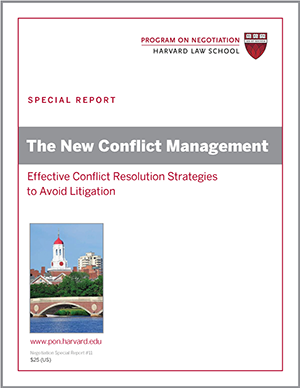
Claim your FREE copy: The New Conflict Management
In our FREE special report from the Program on Negotiation at Harvard Law School - The New Conflict Management: Effective Conflict Resolution Strategies to Avoid Litigation – renowned negotiation experts uncover unconventional approaches to conflict management that can turn adversaries into partners.
The Tight-Loose Divide
All cultures have social norms—shared expectations about acceptable behavior. These norms govern everyday choices, such as whether jaywalking or tardiness is tolerated, as well as high-stakes behaviors, such as whether citizens comply with public health rules during an emergency.
Cultures vary in the strength of their social norms along a tight-loose continuum, and those differences have profound effects on behavior.
Research by Gelfand and her colleagues shows that the degree of threat a culture has historically faced—from natural disasters to wars, pandemics, or chronic scarcity—helps determine whether it evolves to be relatively tight or loose. Countries such as China, Malaysia, Singapore, and Pakistan have survived repeated threats by “tightening up.” Strict rules and strong coordination have helped them respond quickly and collectively, though such cultures also risk becoming overly rigid or authoritarian.
By contrast, cultures that have faced fewer existential threats have had more freedom to loosen their norms. In looser cultures such as the United States, the Netherlands, Spain, and Brazil, citizens tend to prize autonomy and creativity, and rules are more flexible. These cultures often excel at innovation but can struggle when rapid coordination and compliance are required.
Not surprisingly, countries that leaned tight—such as Singapore and South Korea—were relatively effective at slowing the spread of Covid-19 through disciplined coordination and high public compliance. In contrast, the U.S. response was more fragmented, and resistance to restrictions on individual freedom produced the kind of uneven outcomes one would expect in a looser culture.
When Cultural Conflicts Arise
Tight-loose dynamics don’t apply only to nations. All kinds of cultures—states, organizations, neighborhoods, and even families—fall somewhere along the tight-loose continuum. And when a sudden threat appears, cultures can tighten dramatically.
New York City, for example, is known for its looseness: openness, diversity, and creative energy. Yet when Covid-19 threatened to overwhelm hospitals, New Yorkers tightened up quickly, largely accepting strict limits on movement and daily life. Meanwhile, areas that experienced less immediate impact, such as Florida and Wisconsin, favored looser responses, including keeping businesses and beaches open.
Tight-loose cultural conflicts also played out within families. Those most vulnerable to the virus—older adults or people with underlying health conditions—often adopted the tightest behaviors, venturing out rarely and masking consistently. Younger, healthier family members were more likely to resist restrictions, believing their personal risk was low.
“When groups with fundamentally different cultural mind-sets meet, conflict abounds,” Gelfand writes. Those who lean tight accuse those who lean loose of endangering lives. Those who lean loose accuse those favoring tighter rules of crippling the economy and eroding core freedoms.
Strategies to Prevent Cultural Misunderstandings
Given these dynamics, how can we practice more effective intercultural conflict resolution—in our homes, workplaces, and communities?
“Creating space for empathy can prove invaluable for combating intergroup hostility,” Gelfand writes.
When cultural conflicts about adherence arise in your home, think about whether tight-loose mindsets are clashing. Where do you fall on the tight-loose continuum? While all of us are capable of tightening (think libraries) or loosening (think parties) depending on the context, we tend to have a default preference for rule making and rule breaking. To find out yours, take the TL mindset quiz.
Next, consider where others may fall—and why. Personal history, health risks, and lived experiences all shape how people respond to threat. Listen without judgment. Share your own concerns and fears. From there, try to negotiate solutions that respect both safety and autonomy.
Virtual interactions can also reduce cultural conflict across distance. In research conducted by Gelfand and her collaborator Joshua Jackson, an intervention aimed at easing hostility between Americans and Pakistanis—members of loose and tight cultures, respectively—showed promising results. Students from each culture read diary entries describing the daily lives of students from the other culture. Afterward, participants viewed the other culture as more similar to their own and more positively overall.
The lesson is a simple but powerful one: by taking time to read, listen, and engage with people’s stories, we can better understand the behavior that otherwise feels threatening or irrational.
What types of cultural conflicts did you manage to resolve effectively during the Covid-19 pandemic?
Claim your FREE copy: The New Conflict Management
In our FREE special report from the Program on Negotiation at Harvard Law School - The New Conflict Management: Effective Conflict Resolution Strategies to Avoid Litigation – renowned negotiation experts uncover unconventional approaches to conflict management that can turn adversaries into partners.