In International Negotiations, Manage Hard Bargainers
Public demands and threats—particularly when delivered as a precondition to negotiation—make negotiations more competitive and less collaborative. … Learn More About This Program 
PON – Program on Negotiation at Harvard Law School - https://www.pon.harvard.edu
International negotiation requires the ability to meet special challenges and deal with the unknown. Even those experienced in cross-cultural communication can sometimes work against their own best interests during international negotiations. Skilled business negotiators know how to analyze each situation, set up negotiations in ways that are advantageous for their side, cope with cultural differences, deal with foreign bureaucracies, and manage the international negotiation process to reach a deal.
The Program on Negotiation notes that in any international negotiation, several critical tactics should be considered:
Researchers have confirmed a relationship between national culture and negotiation style and success. An ongoing project sponsored by Northwestern University’s Dispute Resolution Research Center is exploring the link between process and outcomes—specifically, how cultural tendencies lead to certain process choices, which, in turn, can lead to better or worse negotiation results.
For example, while conventional wisdom tends to hold that there’s strength in numbers, some cultures may dislike being faced with a sizeable negotiating team, poisoning the negotiations right from the start.
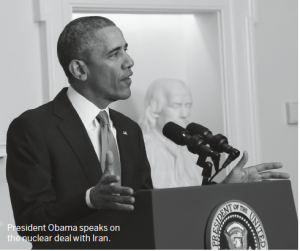
At the same time, diplomatic negotiations, such as those between the U.S. and Iran over nuclear capabilities, can be quite different from business negotiations. For example, it’s critical to maintain a reputation for impartiality, and to be aware how your international goals potentially interact and contradict, so you can establish a consistent stance in your relations with groups you are trying to woo.
Finally, due to the enormous influence of China in today’s world markets, PON offers numerous insights into Chinese negotiation styles, which include a strong emphasis on relationships, a lack of interest in ironclad contracts, a slow dealmaking process, and widespread opportunism.
Public demands and threats—particularly when delivered as a precondition to negotiation—make negotiations more competitive and less collaborative. … Learn More About This Program 
In dealmaking, we typically devote significant time to trying to convince a counterpart of the logic and appeal of our proposals. But sometimes our role becomes a more defensive one, as our negotiation behaviors focus on trying to dissuade others from pursuing a route that we believe could be disastrous.
That was the task outgoing United … Read Closing the Deal in Negotiations 
In negotiation, we sometimes become so focused on what we’re trying to achieve at the bargaining table that we fail to adequately account for how the deal could look to observers. As two recent deals that the U.S. government reached with Iran show, it’s important for professional negotiators to consider the optics. … Learn More About This Program 
The five permanent members of the UN Security Council plus Germany were able to arrive at a negotiated agreement with the Islamic Republic of Iran to curtail its nuclear weapons development program. Read this article to find out what diplomatic negotiation strategies were employed by the representatives from the bargaining countries and how they impacted … Learn More About This Program 
In 2004, after Japanese regulators shut down Citigroup’s private bank in the country for breaking numerous laws, then-CEO Charles O. Prince made headlines by traveling to Japan, bowing deeply before television cameras, and apologizing for his firm’s mistakes. As unusual as it seemed in American eyes, the public apology was widely seen in Japan as … Learn More About This Program 
January 16, 2016, was a memorable day in U.S.-Iranian relations. That day, the International Atomic Energy Agency reported that Iran was in compliance with the terms of the nuclear agreement it reached in mid-2015 with the United States, which represented Russia, China, France, Germany, and Great Britain in the talks. The news prompted the United … Learn More About This Program 
Ever since U.S. general Henry M. Robert published Robert’s Rules of Order in 1876, groups have relied on the principle of majority rule, measured with a simple yea or nay vote at the end of the negotiation process. … Learn More About This Program 
Diplomats deal with difficult people when engaging in international negotiations in ways integrative negotiators may find useful for developing their negotiation skills. … Learn More About This Program 
“Give them an inch, and they’ll take a mile.” Unfortunately, that’s the attitude with which many people approach negotiation. Convinced that their counterparts will take advantage of any concessions and compromise they make, they refuse to make any at all. … Learn More About This Program 
When a negotiating counterpart threatens to scuttle a potentially beneficial deal, how can you defuse the threat and get talks back on track? … Learn More About This Program 
Lost your password? Create a new password of your choice.
Copyright © 2026 Negotiation Daily. All rights reserved.