Back in 2013, New York Times‘ James B. Stewart interviewed negotiation expert and Program on Negotiation co-founder William Ury to reflect on the aftermath of Washington’s last-minute effort to avoid the so-called fiscal cliff. According to Ury, the diagnosis for what ails lawmakers in Washington, D.C., was straightforward: they needed to learn how to negotiate.
Ury, the co-author of Getting to Yes and a longtime leader at the Program on Negotiation at Harvard Law School, did not mince words.
“This isn’t rocket science … It’s sad to watch this kind of brinksmanship … There are plenty of ways to arrive at a good, responsible agreement that’s satisfactory to each side and, above all, is good for the country. You could put some high school students together and they could do it.”
When Positions Harden, Progress Stops
By Ury’s account, each side in the debate had adopted increasingly rigid positions, making meaningful negotiation at the bargaining table extraordinarily difficult. Escalating anger and frustration, he warned, only serve to create “huge and unnecessary obstacles to reaching an agreement.”
To illustrate the danger, Ury invoked the work of former Harvard professor and Nobel Prize–winning economist Thomas Schelling, who famously likened such standoffs to a high-speed game of chicken: two trucks barreling toward one another, each side hoping the other will swerve first.
In Washington-style brinksmanship, however, neither truck wants to turn—and the crash risks harming everyone.
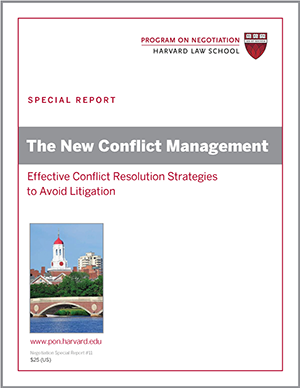
Claim your FREE copy: The New Conflict Management
In our FREE special report from the Program on Negotiation at Harvard Law School - The New Conflict Management: Effective Conflict Resolution Strategies to Avoid Litigation – renowned negotiation experts uncover unconventional approaches to conflict management that can turn adversaries into partners.
Separate the People from the Problem
Many of the dynamics in these kinds of negotiations are fueled by emotion: anger, frustration, and feelings of betrayal. These forces can quickly overwhelm rational problem-solving.
In negotiations of all kinds, Ury argues, “the key is to distinguish between the people and the merits. It doesn’t always have to be so personal.” Both sides, he said, need to take a breath, step back, and focus on outcomes that serve not only their party, but the broader needs of the nation.
Dr. Ury calls this method ‘going to the balcony,’ where one steps back from the ongoing negotiation, assesses the situation and develops an objective view of it.
A Path Toward a Grand Bargain
Although the experts interviewed by Stewart generally agreed that the Obama administration held a somewhat stronger negotiating position at the time, Ury still expressed hope for a potential “grand bargain” between the parties.
To encourage movement in that direction, he floated a practical proposal: President Barack Obama could agree to engage in long-term debt and spending negotiations, while Republicans could approve an increase in the debt ceiling—without explicitly tying the two issues together.
Both sides get something. The president would strengthen his hand and it would be good for the country. He could convey the message that to get spending cuts, you don’t have to hold a gun to the head of the country. The Republicans would be hard pressed to say no. They can say that spending cuts are back on the table. They could aim for a ‘grand bargain’ or maybe a series of smaller bargains.
What have you learned from observing presidential negotiations over the years? Share your thoughts in the comments below.
Claim your FREE copy: The New Conflict Management
In our FREE special report from the Program on Negotiation at Harvard Law School - The New Conflict Management: Effective Conflict Resolution Strategies to Avoid Litigation – renowned negotiation experts uncover unconventional approaches to conflict management that can turn adversaries into partners.
Related Negotiations Article: Becoming a More Balanced Negotiator