When competing with multiple parties to secure a coveted resource, whether a dream house, a cool invention, or a talented new hire, it can be hard to stand out from the pack. Amazon faced that challenge in its $13.4 billion acquisition of upscale grocer Whole Foods in 2017, as reported by Business Insider. While the M&A negotiation was a short-term success, the implementation stage has been rocky. The merger highlights the risks of rushing through a negotiation and the importance of accounting for culture.
Food Fight
For years, Whole Foods faced pressure to prop up its slumping stock price and reverse declining profits. In April 2017, activist hedge fund Jana Partners revealed it had acquired a nearly 9% stake in the grocer and was seeking to shake up upper management, the Wall Street Journal reports.
Unwilling to surrender control, then–Whole Foods CEO John Mackey and his team hired the advisory firm Evercore to fend off the hostile investors and help chart a path forward. The same week, Bloomberg reported that Amazon had been considering a bid for Whole Foods but had let it drop. Curiosity piqued, Whole Foods put out some feelers; Amazon agreed within days to meet to discuss a merger.
Meanwhile, Jana Partners was demanding an overhaul of the grocer’s board of directors, among other changes. The Whole Foods board met to consider its response, even as the company’s leaders flew to Seattle for a meeting with Amazon that Mackey later characterized as “love at first sight.”
With pressure from Jana Partners mounting, Whole Foods reportedly also discussed a potential “merger of equals” with competitor Albertsons, as well as a commercial supply-chain deal with another competitor.
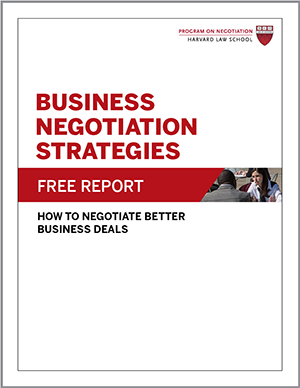
Claim your FREE copy: Business Negotiation Strategies: How to Negotiate Better Business Deals
Discover step-by-step techniques for avoiding common business negotiation pitfalls when you download a copy of the FREE special report, Business Negotiation Strategies: How to Negotiate Better Business Deals, from the Program on Negotiation at Harvard Law School.
Pairing Off
On May 23, Amazon, represented by Goldman Sachs, submitted a written offer to purchase Whole Foods for $41 per share, 17% above the grocer’s $35-per-share trading price. Amazon stipulated two key conditions: utmost secrecy and exclusive negotiation rights. If word of the talks got out or if Whole Foods wanted to auction itself off to the highest bidder, Amazon said it would bow out.
With Evercore advising that Amazon would likely offer the best price, Whole Foods decided to focus on partnering with the online retailer. The grocery chain made a counteroffer of $45 per share, or almost $14.4 billion. Amazon returned with a “best and final” offer of $42 per share—and again warned Whole Foods not to approach other potential bidders, saying it was prepared to close the deal quickly.
Whole Foods agreed, and the merger went public on June 15. The purchase marked “a major escalation” in the online merchant’s battle with Walmart for bigger slices of the $800 billion that Americans spend annually on groceries, according to the New York Times
Shut-Down Moves in M&A Negotiation
Amazon successfully shut down its competition by making exclusivity a condition of its negotiations with Whole Foods. In his book Dealmaking: The New Strategy of Negotiauctions (Norton, 2020), Harvard Business School and Harvard Law School professor Guhan Subramanian notes that such “shut-down moves” can succeed at prematurely cutting off the competition in an auction or “negotiauction”—negotiation-auction hybrid.
To carry out such advanced M&A negotiation tactics, you need to give your target an incentive to deal with you exclusively. This might mean an eye-catching offer, a reputation for prestige, or opportunities to reach new customers.
Accompany your shut-down move with a credible threat to walk away if the target refuses to agree to an exclusivity period—and then be prepared to do so. Finally, note that shut-down moves are particularly effective when your target is in a hurry to reach agreement, as Whole Foods was.
The Risk of a Culture Clash
Notably, an exclusive negotiation that closes quickly comes with a clear risk: Negotiators don’t have time to build rapport and discuss intangible issues, such as culture. Indeed, after the merger, a culture clash emerged between Amazon’s “tight” corporate culture and Whole Foods’ “loose” one, according to Stanford Professor Michele Gelfand and her colleagues. For example, many Whole Foods employees were unhappy with strict new inventory-management procedures and compliance scorecards Amazon imposed. “In addition to negotiating price and other financial terms, organizations discussing a merger need to negotiate culture,” write Gelfand and colleagues. (This European Business Review article offers more guidance for cross-cultural business negotiations.)
Eight years after the M&A negotiation, Amazon’s share of the U.S. grocery market remains small. And in June 2025, the news broke that Amazon was putting new leadership in charge of Whole Foods and increasing oversight of the business.
In M&A negotiation and beyond, when a potential business partner wants an exclusive courtship, remember that there are often benefits to taking things slowly. The goal isn’t to close a deal, but to determine whether a deal seems advisable and to do as much as possible to set it up for success.
What lessons have you absorbed from this M&A negotiation and others in the news?
Claim your FREE copy: Business Negotiation Strategies: How to Negotiate Better Business Deals
Discover step-by-step techniques for avoiding common business negotiation pitfalls when you download a copy of the FREE special report, Business Negotiation Strategies: How to Negotiate Better Business Deals, from the Program on Negotiation at Harvard Law School.
Claim your FREE copy: Business Negotiation Strategies: How to Negotiate Better Business Deals
Discover step-by-step techniques for avoiding common business negotiation pitfalls when you download a copy of the FREE special report, Business Negotiation Strategies: How to Negotiate Better Business Deals, from the Program on Negotiation at Harvard Law School.