


It’s a common question: Is there a single best negotiation style?
Most research suggests that negotiators who lean toward a cooperative style tend to outperform hard bargainers when it comes to generating creative, value-creating solutions. Cooperative negotiators are often more successful at identifying shared interests and uncovering novel tradeoffs that improve outcomes for both sides.
They also tend to report greater satisfaction—not just with the final deal, but with the negotiation process itself. As researcher Michele Gelfand Weingart and others have observed, cooperative negotiators are more likely to leave the table feeling positive about both the relationship and the result.
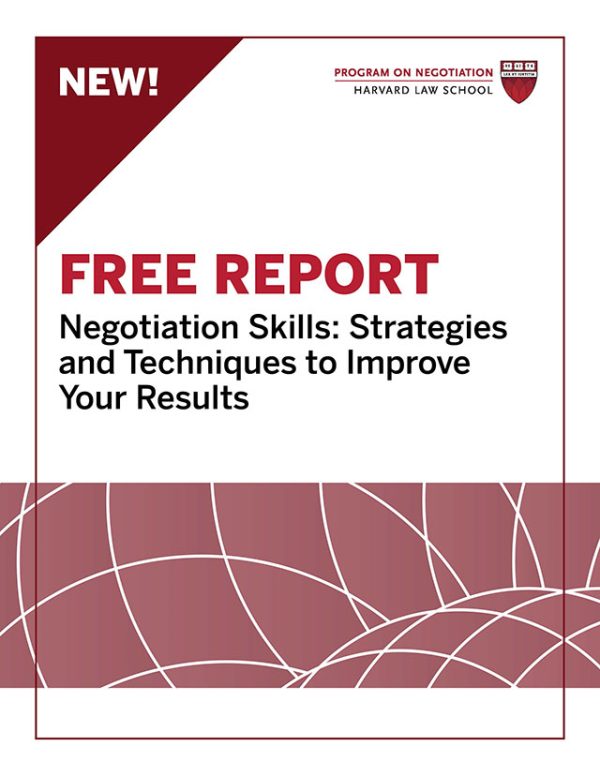
Claim your FREE copy: Negotiation Skills
Build powerful negotiation skills and become a better dealmaker and leader. Download our FREE special report, Negotiation Skills: Negotiation Strategies and Negotiation Techniques to Help You Become a Better Negotiator, from the Program on Negotiation at Harvard Law School.
At the same time, cooperation alone is not enough.
Claiming value—advocating clearly and persistently for your interests—is equally important. A negotiator who focuses only on harmony may leave value on the table. Conversely, a negotiator who focuses only on winning may damage relationships and limit future opportunities.
The most effective approach is balance:
- Build a cooperative relationship.
- Focus on creating value.
- Then work strategically to claim your fair share of that value.
Strong negotiators know when to collaborate—and when to assert.
Develop Your Negotiation Style
Rather than trying to reinvent yourself overnight, think in terms of refinement. The following three tips can help you stay aware of—and strengthen—your personal negotiation style.
- Practice at Home
If you want to grow as a negotiator, start in low-stakes environments.
Instead of attempting a complete style overhaul in a high-pressure business deal, experiment gradually. If you struggle with assertiveness, practice advocating for yourself in everyday situations—splitting household responsibilities, choosing a restaurant, or negotiating weekend plans.
Small wins build confidence. Over time, those skills carry over into professional negotiations.
- Build Trust with Small Wins
Early trust can shape the entire tone of a negotiation.
Researchers Jeanne Brett Tinsley and Kathleen O’Connor suggest that allowing your counterpart a small win at the outset can promote cooperation and goodwill. For example, you might:
- Let them choose the meeting time or format.
- Invite them to set the agenda order.
- Acknowledge their priorities early in the discussion.
These modest concessions cost little but can create momentum. When people feel respected and heard, they are more likely to reciprocate in kind.
- Enhance Your Reputation
Your negotiation style often precedes you.
Colleagues and counterparts form impressions quickly—and those impressions travel. Cultivate a reputation as someone who is fair, thoughtful, and principled.
During negotiations:
- Clearly label your concessions so they aren’t overlooked.
- Explain the reasoning behind your flexibility.
- Reinforce collaborative intent.
When talks conclude, thank your counterpart for their cooperation and express interest in working together again. These gestures increase the likelihood that others will describe you as a constructive negotiator to future partners.
Strive for Strategic Balance
No single negotiation style is universally superior. Context matters. Stakes matter. Relationships matter.
But negotiators who combine cooperation with thoughtful assertiveness—who create value first and then claim it carefully—tend to achieve both strong outcomes and durable relationships.
Are you confident in your negotiation skills? Leave a comment.
Claim your FREE copy: Negotiation Skills
Build powerful negotiation skills and become a better dealmaker and leader. Download our FREE special report, Negotiation Skills: Negotiation Strategies and Negotiation Techniques to Help You Become a Better Negotiator, from the Program on Negotiation at Harvard Law School.



The best negotiators have high contextual intelligence (CI). A key element of CI is the ability and readiness to move one’s own style along a combative-collaborative continuum, and to induce counterpart negotiators to do the same.