

Measuring the Cost of Betrayal Aversion
Richard Zeckhauser and Program on Negotiation faculty member Iris Bohnet have found that negotiators leave substantial amounts of money on the table due to betrayal aversion. They … Read Measuring the Cost of Betrayal Aversion
Managing Internal Conflict: Russia’s Bid to Join the WTO
In June 1993, a little over a year after the fall of communist rule in Russia, President Boris Yeltsin submitted an application for Russia to join the … Read This Post
The Role of Urban Planners in Negotiations: Case Study of Israeli-Palestinian Negotiations
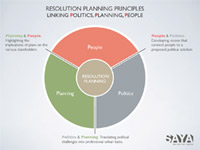
Can urban planning tools help negotiators develop creative solutions to complex disputes? Karen Lee Bar-Sinai, Loeb Fellow at Harvard Graduate School of Design (GSD), recently explored this … Read This Post

When Time Isn’t Money
Due to deeply ingrained gender stereotypes, women may find it easier to negotiate their time instead of their financial compensation.
Consider that men and women are likely to … Read When Time Isn’t Money
The Island President
The Program on Negotiation, the Environmental Law Program at Harvard Law School and the Harvard Law Documentary Studio are pleased to present a screening of The Island … Read The Island President
The Role of Architects in Negotiations: Designing a “Yes” in Jerusalem
This presentation by Karen Lee Bar-Sinai and Prof. Robert Mnookin is the second of four seminars exploring the role of urban planning in negotiation, co-sponsored by … Read This Post

Penguin Sues Its Own Writers: When Business Negotiations Become Bad PR
In this business world, it’s typically smart practice to keep disputes with key partners private, at least until doing so becomes unfeasible for financial or other reasons. … Read This Post

Setting and Articulating the Goal: Great Negotiator Charlene Barshefsky Shares Her Negotiation Strategy with HLS Students
Great Negotiator Award winner and former United States trade representative (1997-2001) to Japan and China, Ambassador Charlene Barshefsky visited Harvard Law School to speak with students in … Read This Post

Water Diplomacy: Using a Creative Approach
The case of Jordan and Israel shows how even countries at war can negotiate a water agreement if it is framed in non-zero sum terms and trust … Read Water Diplomacy: Using a Creative Approach

Water Diplomacy: Value Creating Approachs to Water Negotiation
Zero-sum thinking emerges when people conceive of water as a fixed resource – one provided by nature in a given quantity that is either static or diminishing. … Read This Post

Harvard Negotiation and Mediation Clinical Program (HNMCP) to Help NYC Councilman Daniel Garodnick Develop a Plan to Cut the City’s Annual Legal Payouts
The Harvard Negotiation and Mediation Clinical Program (HNMCP) will conduct a study for New York City Councilman Daniel Garodnick examining the municipality’s annual legal settlement payouts, the … Read This Post

Water Diplomacy: The Role of Science in Water Diplomacy
Scientific and technical knowledge is important in water negotiations, but not in the ways it has often been used. It is counterproductive to use scientific information to … Read This Post