
Harvard Advanced Mediation Intensive
In-Person Program
Course Dates: April 27–30, 2026
This advanced course is designed for experienced mediators seeking to deepen their skills, refine their strategies, and confidently navigate complex, high-stakes disputes. Through a blend of theory, practice, and case-based learning, participants will learn how to mediate power imbalances, implement impasse breaking techniques, structure the mediation process to suit the specific needs of the parties, and mediate across cultures.
Participants will engage in intensive simulations, receive feedback from seasoned professionals, and leave with actionable strategies to enhance their effectiveness in complex mediation environments. Ideal for legal professionals, HR leaders, executive coaches, and certified mediators ready to take their practice to the next level.
Agenda
DAY ONE
8:00 Registration and Breakfast Buffet
Mediating Power Imbalances
Day 1: 9:00–12:30
Faculty: Audrey Lee
Mediators routinely encounter situations where one party may feel intimidated or disadvantaged—whether due to formal structures (i.e., a reporting relationship between colleagues) or other factors, such as an asymmetry in knowledge, expertise, communication styles, status or comfort with mediation. These imbalances can impact not only mediation outcomes but also how parties participate in mediation or if they choose to participate at all.
Can a mediator “correct” for a power imbalance between parties? Given the mediator’s charge to be impartial, is it appropriate for a mediator to do so—and if so, how? In this session, participants will explore the complex realities of power imbalance, which can manifest in different ways in mediation. Through an interactive presentation, small group discussion, and role play simulation, participants will:
- Identify and assess potential power imbalances
- Reflect on their own default approaches (e.g., Are you more likely to intervene or remain ‘hands off’?)
- Explore when and how to make effective adjustments to your practice
- Practice strategies to prepare for mediating cases where such imbalances exist
Participants will leave with strategies to ensure all parties have meaningful opportunities to express their perspectives, make informed decisions, and achieve desirable outcomes—even in the presence of significant power differences.
Day 1: 1:30–5:00
Impasse Breaking Techniques
Faculty: David Hoffman
This session offers a practical guide to breaking impasse in mediation across family, business, and employment contexts. Participants will explore how to prevent impasse before it arises through thoughtful pre-mediation planning, negotiation coaching, and attention to emotional dynamics. Drawing on diverse mediation styles—facilitative, evaluative, and transformative—the training equips mediators with tools to identify and address the roots of conflict.
In this session you will:
- Examine process interventions like metaphor, silence, humor, role reversal, and reminders of common interests, alongside substantive strategies such as reality testing, range bargaining, mediator’s proposals, and structured settlements.
- Address psychological barriers, including cognitive biases, ambivalence, and fear of losing face.
- Learn how to tackle common challenges and pitfalls, such as inadequate settlement authority, high stakes posturing, and breakdowns in trust.
- Reflect on the ethics and mindset of effective mediators—emphasizing authenticity, tenacity, and candor.
Through case studies and interactive exercises, attendees will leave with a practical “Swiss Army knife” of impasse-breaking techniques to apply immediately in their practice.
5:00–6:30 Cocktail and Networking Reception
DAY TWO
8:00 Breakfast Buffet
9:00–12:30 and 1:30–5:00
Personalized Performance Feedback
Faculty: David Seibel
Individualized feedback helps practitioners understand exactly what they did well and what they need to improve. This accelerates learning and development and is one of the most common requests we get from advanced practitioners.
This session will offer you the opportunity to gain valuable insights tailored to your specific needs. During this immersive day, you will receive constructive feedback that empowers you to elevate your practice. Through engaging role plays, dynamic demonstrations, interactive exercises, and rich discussions with PON faculty and experienced classmates, you’ll hone your craft by sharing your observations and insights with peers.
Expect to leave with at least three actionable ideas to refine your approach, a key area of theory or skill you wish to delve deeper into, and a bolstered network of like-minded professionals to support your growth.
In this session, you will:
- Receive personalized feedback from PON faculty and experienced peers.
- Identify customized advice tailored to improve your individual practice; and
- Share your insights and observations with classmates.
You will leave with:
- At least 3 specific ideas or actions to improve your practice.
- At least 1 area of theory or skill you want to explore further; and
- A stronger network of learning partners.
DAY THREE
8:00 Breakfast Buffet
9:00–12:30 and 1:30–5:00
Strategic Process Design for Complex Mediation
Faculty: Susan Podziba
Complex multi-party, multi-issue conflicts often seem chaotic to mediators, diplomats, executives, and disputants. Process design is the strategic infrastructure that enables large, diverse groups to resolve complex conflict. The numerous inter-related moving parts of parties, issues, interests, power relations, history, dynamics, and constraints create configurations that require uniquely tailored process designs.
By understanding the basic building blocks of process design and learning to refine and sequence process mechanisms, mediators and managers can effectively use the opportunities created by complexity for successful conflict resolution.
In this session you will:
- Analyze dynamics of complex, multi-party, multi-issue conflicts
- Understand the basic building blocks of process design
- Practice the application of core principles to design and reflect upon process infrastructure
- Apply tailored process design strategies to unique groups and conflict scenarios
- Sequence and refine process mechanisms in response to conflict and complexity
- Recognize how to tailor process mechanisms to specific dynamics, barriers and challenges
- Develop strategic thinking practices for addressing complex systems
5:30–7:00 Cocktail and Networking Reception
DAY FOUR
8:00 Breakfast Buffet
9:00–12:30 and 1:30–3:00
Mediating Across Cultures
Faculty: Alain Lempereur
In mediation, parties and neutrals often come from different cultures, not only nations and regions, but organizations and professions. The above combination shapes multiple cultural profiles and worldviews at the table, which in turn impacts behaviors, attitudes, norms, and values.
Culturally sensitive mediators determine what is appropriate or not. They avoid mishaps and initiate breakthroughs. They grasp how each party communicates; approaches and prioritizes relationships, process, and problem solving; perceives and resolves conflicts.
This session asks mediators to probe their personal worldviews, and invites them to understand, and navigate across, parties’ various worldviews. In brief, mediators are equipped with more cultural awareness and tools. In this session you will learn:
- How mediation operates across nations, regions, organizations, and professions
- How behaviors, attitudes, norms, and values build diverse cultural profiles in mediation
- How a mediator probes their own worldview
- How mediators understand, and navigate across, parties’ worldviews
Eligibility Requirements
This advanced program is ideal for experienced mediators, lawyers, and judges who already have foundational mediation training and seek to further deepen their skills and expertise. It is also well suited for professionals who currently oversee or regularly participate in mediations—whether in legal, corporate, healthcare, education, or non-profit settings—and wish to refine their approach to handling complex, high-stakes disputes.
Applicants should have completed a 40-hour training, the Harvard Mediation Intensive, or an equivalent program. The class welcomes globally diverse participants from various industries who are committed to continue to enhance their mediation techniques and strategies.
To maintain a highly interactive and rigorous learning environment, enrollment is selective and limited. Proficiency in English is essential, as the course is conducted entirely in English through intensive simulations and discussions. While proof of English fluency is not required, a strong command of the language is necessary for active participation. Applicants may be contacted to assess communication skills and fit for this advanced training.
This program is strictly limited to 48 people.
Course Dates and Times: April 27–30, 2026
Location: In-person at The Charles Hotel
Faculty: PON’s mediation programs are led by acknowledged experts in their fields and draw on the latest thinking and research to deliver practical techniques and real-world strategies for effectively conducting personal and professional negotiations. The April 2026 Harvard Advanced Mediation Intensive faculty members are Audrey Lee, David Hoffman, David Seibel, Susan Podziba, and Alain Lempereur.
Fees: One 4-day program: $7,997
Tuition fee includes course materials, breakfast buffet, lunch, and snacks during required class times.
Contact Us: Call 1-800-258-4406 (Outside the US: +1-301-528-2676) or email us at: negotiation@law.harvard.edu.
Accommodations: The Charles Hotel: One Bennett Street, Cambridge, MA 02138; 1-800-882-1818; website: www.charleshotel.com
In the heart of Harvard Square, the Charles Hotel offers comfortable accommodations with a broad range of upscale amenities. To reserve your room, call the hotel directly at 1-800-882-1818. Be sure to tell the hotel representative that you are with the Harvard Advanced Mediation Intensive.
You can also book online using the Harvard Advanced Mediation Intensive Reservation link.
April room rate: $399 plus tax
You are encouraged to make your reservation early, as room rates are valid only until the cutoff date, Monday, March 30, 2026 and are subject to availability.
Course Dates: April 27–30, 2026
Our Faculty
Our team is comprised of world-renowned faculty from across Harvard, MIT, and Tufts.
Expert Faculty:

Audrey Lee
Lecturer, Mediation and Diversity & Dispute Resolution, Harvard Law School
Senior Mediator, Boston Law Collaborative, LLC
A specialist in workplace mediations, Audrey Lee is a Lecturer on Law at Harvard Law School where she teaches courses on Mediation and Diversity & Dispute Resolution. She is a Senior Mediator at Boston Law Collaborative, LLC, and has served as a mediator for the U.S. Equal Employment Opportunity Commission and the Massachusetts Commission Against Discrimination. Audrey has served as affiliate faculty at PON since 2016, currently as a lead faculty for the Harvard Mediation Intensive.
In her consulting practice, Audrey works with clients to increase their effectiveness in difficult workplace conversations and negotiations. In recognition of her professional development work with lawyers, Audrey was invited in 2018 to become a Trusted Advisor for the Professional Development Consortium, the national association for individuals responsible for the professional development of lawyers at law firms, law schools, government agencies, and corporations.
Drawing on her experience as a mediator and conflict management consultant, Audrey has worked with clients ranging from lawyers at Am Law 100 firms, to mediators at the Australian Fair Work Commission, and musicians at the League of American Orchestras. Audrey has been featured in Harvard Business Review’s “Insights” series on Leadership and Managing People and in the BBC Capital’s Work Ethic column, and her writing on mediation and dispute resolution has appeared in the Harvard Negotiation Law Review and Pepperdine Dispute Resolution Law Journal, among other publications.

David Hoffman
David A. Hoffman is the John H. Watson, Jr. Lecturer on Law at Harvard Law School, where he teaches three courses: Mediation; Legal Profession: Collaborative Law; and Diversity and Dispute Resolution. David is also an attorney, mediator, arbitrator, and founding member of Boston Law Collaborative, LLC, where he handles cases involving family, business, employment, and other disputes. Prior to founding BLC in 2003, David was a litigation partner at the Boston firm Hill & Barlow, where he practiced family law, employment law, and general litigation for 17 years. He is past chair of the American Bar Association Section of Dispute Resolution, a Distinguished Fellow of the International Academy of Mediators, and a recipient of the Lifetime Achievement Award from the American College of Civil Trial Mediators. David has published three books (including “Bringing Peace into the Room,” with co-editor Daniel Bowling) and more than 100 articles and book chapters on law and dispute resolution. David is a graduate of Princeton University (A.B. 1970, summa cum laude), Cornell University (M.A. 1974, American Studies), and Harvard Law School (J.D. 1984, magna cum laude), where he was an editor of the Harvard Law Review. David’s TEDx talk about “Lawyers as Peacemakers” can be found here: youtube.com/watch?v=JKXv1_Sqe_4. David lives in a cohousing community in Acton, Massachusetts with his wife, Leslie Warner, who is a career coach. Together they have five adult children, an adolescent cat, and a rescue Golden Retriever from Serbia. Links to his publications and his bio can be found here: blc.law/team/david-hoffman.
David Seibel
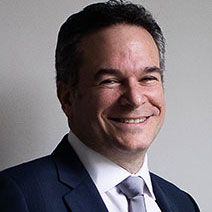
David Seibel is an expert in negotiation, communication, mediation, and dispute resolution. He wears many hats as a trainer, consultant, mediator, and professor. The former president of the Harvard Mediation Program, Seibel has mediated a wide range of criminal and civil disputes on behalf of clients all over the world, ranging from Fortune 500 companies to Iraqi Parliament members.
In addition to teaching, Seibel is also the co-founder and president of Insight Partners, a training and consulting firm that helps companies, governments, and individuals negotiate and communicate more effectively. He also leads Insight Collaborative, a nonprofit dedicated to resolving conflict and improving relationships around the world, and the Insight Peace Education Project, which teaches conflict management skills to youth in postconflict regions.

Susan Podziba
Susan Podziba is a world-renowned mediator and process design expert. For more than 30 years, she has designed and mediated scores of cases across the policy spectrum for clients including the United States Departments of Commerce, Defense, Education, Labor, Health and Human Services, Housing and Urban Development, Interior, and Transportation, as well as for the U.S. Environmental Protection Agency, U.S. Senate, U.S. Institute for Peace, United Nations, The World Bank, British Council, Netherlands Organization for Applied Scientific Research, Emilia Romagna Regional Authority of Italy, and the Negotiation Strategies Institute of Jerusalem. Most of her projects involve working with senior leadership of governments, stakeholders, civil society, and the general public.
Ms. Podziba is Lecturer at Harvard University Graduate School of Design, an expert for the course, Religion and Conflict Transformation, which is organized by SwissPeace at the University of Basel, and has served as a Fulbright Senior Specialist in Peace and Conflict Studies at the University of Amsterdam in the Netherlands. She is author of Civic Fusion: Mediating Polarized Public Disputes and Our Cities: From Corruption to Participatory Democracy as well as numerous book chapters and journal articles.
She has provided process design training to seasoned mediators from around the world privately, at Harvard Program on Negotiation senior executive seminars, for World Bank and European Investment Bank mediators, and United Nations special envoys. Her process designs have resulted in agreements that have affected the lives of hundreds of millions of people.

Alain Lempereur
Brandeis University Alan B. Slifka Professor at the Heller School for Social Policy and Management
Program on Negotiation at Harvard Law School Affiliate Faculty and Executive Committee Member
Harvard Humanitarian Initiative Core Faculty and Negotiation Lead for the UN Global Executive Leadership Initiative
Alain Lempereur promotes his “responsible negotiation” framework worldwide and applies it to leadership, mediation, and humanitarian challenges. He has published a dozen books, including The First Move: A Negotiator’s Companion and Mediation: Negotiation by other Moves. And contributed to more than 100 articles and book chapters.
After getting a research doctorate in law from Harvard Law School and degrees at the Universite Libre de Bruxelles, Lempereur spent 25 years consulting and providing executive training for international organizations, national governments, global consulting firms, and corporations in 70 countries. He founded negotiation and leadership initiatives in Africa, the Middle East, and Europe and was the founding director of IRENÉ – a European negotiation institute he led for 15 years at ESSEC Business School.