
NEW ONLINE PROGRAM!
MANAGING COMPLEX NEGOTIATIONS:
STRATEGIES FOR SUCCESS
June 24–25, 2026 | 9:00 a.m. – 5:00 p.m. ET
Navigating complex negotiations requires you to manage multiple parties with diverse objectives while continuously solving problems and adapting to new developments. To equip you with the skills to handle these more challenging situations, the experts at the Program on Negotiation have developed Managing Complex Negotiations: Strategies for Success.
In this highly interactive, two-day program, you will learn to:
- Manage multiple parties—each with its own interests and perspectives
- Break down complex issues by identifying interconnected topics and addressing them strategically
- Balance competing priorities to achieve mutually beneficial outcomes
- Maintain momentum in extended negotiations through ongoing communication and strategic adjustments
- Navigate power imbalances by recognizing leverage disparities and managing their impact
- Represent someone else’s interests when negotiating on behalf of others
- Address cultural or emotional factors that can heighten sensitivities at the table
- Become a highly effective consensus builder who can form winning coalitions, generate buy-in, and drive value-creating deals
To help you lead effectively at the negotiating table and beyond, this program blends expert-led video lessons, realistic negotiation simulations, and case studies.
Get the strategies, insights, and confidence you need to handle complicated negotiations when you attend Managing Complex Negotiations: Strategies for Success.
Your interactive learning experience will be guided by renowned PON instructor and negotiation expert Brian Mandell. In addition, through our video modules and live online sessions, you will be exposed to the thinking of other PON faculty members, all renowned experts in negotiation.
Program Agenda
DAY 1: Wednesday, June 24, 2026
MORNING:
Module 1: Identifying Interests
9:00 a.m.–12:30 p.m. ET
What happens behind the negotiating table is essential to the outcome. In this module, you will explore the best ways to manage complex negotiations—through synchronizing internal and external processes to get the best result. Alongside your fellow participants, you will learn how to:
- Prepare for your own internal negotiations by identifying the parties, their interests, and how to “get to yes”
- Use indirect influence when you may not have formal direct authority to advance your agenda
- Handle the tension between creating value and claiming value
- Overcome the challenges of complex multi-stakeholder negotiations
- Understand how to manage conflicts of interest, potential misalignments, or differences in objectives that can arise between a principal (the person or entity the negotiator is representing) and an agent (the negotiator or representative acting on the principal’s behalf)
AFTERNOON:
Module 2: Overcoming Cultural Barriers
1:30 p.m.–5:00 p.m. ET
Negotiating better results is contingent upon building successful relationships. In this module, you will learn how to overcome barriers to negotiating effectively across cultures. Specifically, you will:
- Understand the complexity that cultural differences can add to your negotiation and its outcomes
- Recognize real versus perceived differences in behavior, attitudes, norms, and values—and how they may influence negotiating style
- Understand how to avoid stereotypes and appreciate each negotiator for their multifaceted background and singularity
- Acquire strategies for bridging cultural divides and communication gaps
- Discover the importance of working with general negotiation frameworks that are relevant across cultures
DAY 2: Thursday, June 25, 2026
MORNING:
Module 3: Navigating Structural Complexity
9:00 a.m.–12:30 p.m. ET
At the negotiation table, it may look like only two parties are involved; however, the truth is that many stakeholders can influence the outcome. In this module, you will learn how to build coalitions and facilitate agreement among multiple stakeholders. Alongside your fellow participants, you will:
- Acquire sophisticated negotiation strategies for working in highly complex situations and planning ahead for future negotiations
- Explore practical ways to map out stakeholders
- Learn how to sequence an alliance-building process by figuring out patterns of influence
- Prepare for your afternoon role play
AFTERNOON:
Module 4: Examining Complex, Real-World Negotiations
1:30 p.m.–5:00 p.m. ET
Wondering how complex negotiations play out in the real world? Get a firsthand look at the many factors, dynamics, and challenges that make a negotiation process more intricate and difficult to navigate.
- Get a firsthand understanding of what it’s like to facilitate large, complex, multinational negotiations
- Hear Christiana Figueres—Great Negotiator award winner and former executive secretary of the United Nations Framework Convention on Climate Change—discuss the 2015 climate talks in Paris
- Gain an inside look at how back-table negotiations can help you recruit allies to build a winning coalition
- Spend 90 minutes in the afternoon of Day Two negotiating, receiving feedback, and debriefing
Eligibility Requirements: PON online programs are open to participants from all disciplines and professional fields.
For the success of all program participants, applicants are required to be fluent in understanding, speaking, reading, and writing English. While no specific exam is required, a TOEFL score of 100 (internet based) or higher is recommended. Test results do not need to be submitted. PON expects that all participants represent their language proficiency accurately.
Please note simultaneous translation is not provided in any open-enrollment program and the use of personal translation services or devices is prohibited.
Location: Live sessions via Zoom.
Online Requirement: Individuals must have reliable internet access, a microphone, and speakers. Participants are expected to join from a suitable, quiet location, with a device that permits full participation in the program activities. Attending the program on a tablet or mobile device is not advised. Participants must meet the attendance requirements and complete the program evaluation to receive a certificate of completion.
Tuition: General Tuition: $2,497
Certificate: When you complete your training program you will receive a certificate from the Program on Negotiation at Harvard Law School signed by Program on Negotiation Executive Committee Chair, Professor Guhan Subramanian.
Please note that conditions of receiving the certificate of completion include attendance at and participation in all sessions throughout the program, as well as completion of the program evaluation.
Our Faculty
Your Managing Complex Negotiations Online Instructor:
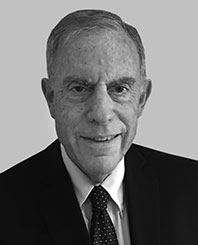
Brian Mandell
Mohammad Kamal Senior Lecturer in Negotiation and Public Policy, Harvard Kennedy School; Director, Harvard Kennedy School Negotiation Project; Faculty Associate, Center for Public Leadership, Harvard Kennedy School; Vice Chair for Executive Education for the Program on Negotiation at Harvard Law School; Senior Research Associate, Belfer Center for Science and International Affairs, Harvard Kennedy School; Senior Fellow, Future of Diplomacy Project, Harvard Kennedy School; Faculty Co-Chair, Mastering Negotiation: Building Sustainable Agreements, Harvard Kennedy School; Chair, Wexner Senior Leaders Program, Harvard Kennedy School
Educational Videos Feature Expert Faculty:

Gabriella Blum
Rita E. Hauser Professor of Human Rights and Humanitarian Law; Executive Committee Member, Program on Negotiation at Harvard Law School
Widely published in the fields of public international law and the law and morality of war, Gabriella Blum is a Carnegie Fellow and recipient of the Roy C. Palmer Prize on Democracy, Civil Liberties, and the Rule of Law. She served with the Israel Defense Forces as a senior legal advisor in the International Law Department, Military Advocate General’s Corps, where she was involved in the Israeli-Arab peace negotiations, Israeli strategic cooperation with foreign forces, and the administration of the Palestinian occupied territories. She later joined the Israeli National Security Council, Prime Minister’s Office, as a strategy advisor.
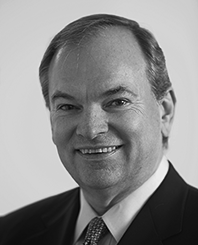
James K. Sebenius
Gordon Donaldson Professor of Business Administration, Harvard Business School; Vice Chair for Practice-Focused Research, Program on Negotiation Executive Committee; Chair, Great Negotiator Award Committee; Director, Harvard Negotiation Project; Co-director, American Secretaries of State Program
An authority on complex negotiations, James Sebenius has advanced the field in the academic realm, in the public and diplomatic sectors, and in the business world; outside Harvard, he has worked full time in the U.S. Commerce and State Departments as well as at the Blackstone Group. He is also the co-founder of Lax Sebenius LLC.

Robert Mnookin
Samuel Williston Professor of Law, Harvard Law School; former Chair, Executive Committee, Program on Negotiation at Harvard Law School; Director, Harvard Negotiation Project, Harvard Law School
A leading scholar in the field of conflict resolution, Robert Mnookin has applied his interdisciplinary approach to negotiation and conflict resolution to a remarkable range of problems, both public and private. As a member of the Panel of Distinguished Neutrals of the International Institute for Conflict Prevention & Resolution (CPR Institute), he has resolved a large number of complex disputes. Mnookin has also served as a consultant to governments and international agencies. Renowned as a teacher and lecturer, he has taught numerous workshops and trained many professionals in negotiation and mediation skills.
Lawrence Susskind
Ford Foundation Professor of Urban and Environmental Planning, Massachusetts Institute of Technology (MIT); Director, Teaching Negotiation Resource Center, Program on Negotiation, Harvard Law School; Director, MIT-Harvard Public Disputes Program; Vice Chair of Pedagogy, Program on Negotiation, Harvard Law School
As one of the founders of the Program on Negotiation, Lawrence Susskind has delivered specialized negotiation and mediation training to more than 40,000 executives from around the world. A visiting lecturer at more than 50 universities in 20 countries, including Harvard and Stanford Law Schools, he has published more than 70 teaching simulations and a dozen teaching videos.

Hannah Riley Bowles
Co-director, Center for Public Leadership; Co-director, Women and Public Policy Program; Roy E. Larsen Senior Lecturer in Public Policy and Management
Hannah Riley Bowles is a leading expert on how gender influences pay negotiations and, more broadly, on negotiation as a micromechanism of inequality. She has been actively involved in negotiation and conflict management training, practice, and research for more than 25 years, having worked for the governments of Argentina, Costa Rica, and Germany. Her current research focuses on women’s leadership advancement, examining both situational barriers and individual strategies.