
When we desperately want a desired outcome that only one person or group can provide, we are often tempted to try to wear them down with persuasion, pleas, and even threats. Yet, the risk is clear: Push too hard, and we risk causing offense and ending the conversation.
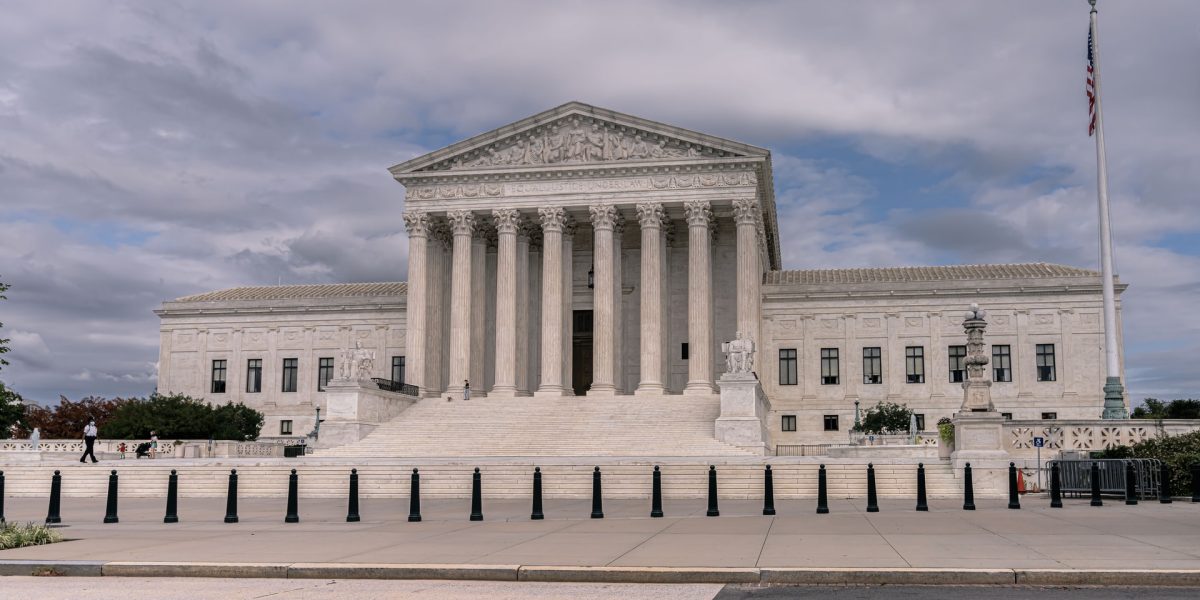
As U.S. President Joe Biden took office in January 2021, he faced the question of whether to put pressure on 83-year-old Supreme Court justice Stephen G. Breyer to retire. Biden’s decision raises difficult questions regarding the role of communication in negotiation—and suggests when staying silent may be the best option.


Claim your FREE copy: Negotiation Skills
Build powerful negotiation skills and become a better dealmaker and leader. Download our FREE special report, Negotiation Skills: Negotiation Strategies and Negotiation Techniques to Help You Become a Better Negotiator, from the Program on Negotiation at Harvard Law School.
Breyer, Retire?
Biden’s predecessor, Donald Trump, had great success with his Supreme Court nominees. Three conservative justices were appointed during Trump’s four-year term, establishing a 6-3 conservative majority on the court.
Biden was keen to begin trying to swing the court in the other direction. As the oldest justice, liberal-leaning Breyer was the most obvious target for replacement.
But upon taking office, the new president warned his staff not to put any pressure on Breyer to retire, write Katie Rogers and Charlie Savage in the New York Times. This was in part because Biden, who had been chair of the Senate Judiciary Committee when Breyer was confirmed in 1994, respected the justice and his role.
Biden also “knew liberal groups were already applying plenty of pressure—and too much could backfire,” according to Rogers and Savage. Academics had taken out newspaper ads urging Breyer to retire, and liberal advocacy group Demand Justice hired a billboard truck to circle Washington, D.C., with the message “Breyer, retire.” Added pressure from the new president could come across to Breyer as heavy-handed and disrespectful.
In an August 2021 interview, Breyer had hinted that he didn’t want to be replaced by someone who would reverse the work he had done but said that “many considerations” factored into his retirement decision. “A judge’s loyalty is to the rule of law, not the political party that helped to secure his or her appointment,” he wrote in his 2021 book, The Authority of the Court and the Peril of Politics. Such statements suggested that Breyer would not appreciate being pressured by the Biden White House to retire.
As president, Biden stuck to his strategy; he didn’t speak to Breyer until the justice hand-delivered his resignation letter, advisers told the Times. However, the president and his advisers did prepare for Breyer’s possible retirement by considering potential replacements.
Dancing around the Question
Regarding the delicate issue of aging Supreme Court justices’ retirement differently, recent presidents have taken different approaches, all of them underscoring the importance of communication skills in negotiation. Trump’s first White House counsel, Donald F. McGahn II, “courted Justice Anthony Kennedy to retire in 2018 without bringing up the topic,” sources told the Times. Instead, McGahn reportedly sought out Kennedy’s advice on lower-court vacancies and recommended one of the justice’s former clerks, Neil Gorsuch, to replace Antonin Scalia. Kennedy retired in July 2018 and was replaced by another former clerk of his, conservative Brett Kavanaugh.
Former president Barack Obama never directly suggested to liberal justice Ruth Bader Ginsburg that she retire but invited her to lunch at the White House and “danced around the subject.” She chose not to retire; she died during Trump’s presidency, and her replacement was conservative Amy Coney Barrett.
After Breyer announced he was retiring, Biden took the unusual step of inviting him to speak publicly about his decision at the White House, perhaps to “give the retiring justice a moment under the lights,” according to the Times.
Silence Versus Communication in Negotiation
Biden was perhaps lucky that Breyer decided on his own to retire. The story raises the broader question of whether to engage in persuasion and communication in negotiation or to give the other party some space. Here are a few guidelines for your negotiation preparation:
- Show deference and respect. Whether or not you choose to speak with someone directly, aim to show respect throughout their decision-making process. Studying your counterpart’s temperament, past actions, and statements will help you understand what they value—and avoid causing offense.
- Let others put on the pressure. If you know others are already pressuring your target to go along with your preferred goal, it might be smart to back off and let them take the lead. If you think others are coming on too strong, counsel them to cool it.
- Take a mutual gains approach. Carefully crafted communication in negotiation often won’t be sufficient to change someone’s mind. Analyze what might win over your target, and see if you can bring it to them—but make sure your exchange won’t unduly harm those beyond the negotiating table.
What factors do you balance when considering the role of persuasion and communication in negotiation?
Claim your FREE copy: Negotiation Skills
Build powerful negotiation skills and become a better dealmaker and leader. Download our FREE special report, Negotiation Skills: Negotiation Strategies and Negotiation Techniques to Help You Become a Better Negotiator, from the Program on Negotiation at Harvard Law School.